Dr Matthew J Muir
Oct 2026
Wildlife trafficking is often imagined as a problem that begins in a forest, with a poacher and a gun. In reality, it usually begins somewhere else: with demand. A buyer wants an exotic pet, a carved ivory ornament, a tiger-bone product, a rare reptile, a parrot, shark fins, orchids, or an animal marketed as medicine or status. Criminal networks then connect that demand to supply.
The scale remains enormous. The UN Office on Drugs and Crime’s World Wildlife Crime Report 2024 analysed seizures from 2015 to 2021 across 162 countries and territories. Around 4,000 plant and animal species appeared in seizures, including about 3,250 species listed by CITES. Authorities recorded roughly 13 million seized items and more than 16,000 tonnes of wildlife commodities. Those figures represent detected trade, not the true volume. Seizure data are shaped by enforcement effort and inevitably miss a large proportion of trafficking.
The picture in 2026 is not simply “more poaching”. It is a rapidly adapting market. INTERPOL and the World Customs Organization’s Operation Thunder 2025 involved 134 countries, produced 4,640 seizures and identified about 1,100 suspects. Nearly 30,000 live animals were seized in one month. INTERPOL reported that the record live-animal total was driven largely by demand for exotic pets. Authorities also seized more than 245 tonnes of protected marine wildlife, nearly 10,500 butterflies, spiders and insects, and more than 10 tonnes of live plants and plant derivatives.
This diversification matters. Wildlife crime is not only about elephants, rhinos and tigers. Small reptiles, songbirds, insects, succulents and aquarium species can be removed from the wild at scales that are difficult to see until populations crash.
The internet has changed the trade
One of the most important shifts is digital. A 2026 review in Nature Reviews Biodiversity concluded that online illegal wildlife trade now affects thousands of animal, plant and fungal species. Persistent consumer demand, low perceived risk, anonymity and weak platform governance allow illegal markets to operate at speed and across borders.
The phrase “dark web” can therefore be misleading. Some trafficking does use encrypted or hidden channels, but a great deal of wildlife commerce begins in ordinary digital spaces: social media feeds, messaging apps, marketplace listings and collector groups. Recent research has documented public Instagram advertisements involving illegal carnivore trade in Iran, persistent illegal bird sales on social media in Argentina, and 178 bird species advertised in illicit online trade in China.
Technology companies are finally being pushed closer to the centre of the solution. In June 2026, 11 major technology and e-commerce companies, including Google, Meta, TikTok, Amazon, eBay, Etsy and Alibaba, made new commitments through United for Wildlife to use AI and shared approaches to detect and remove illegal wildlife listings. That is potentially important, but commitments are not outcomes. Success should be judged by independent measures such as listing removal rates, repeat-offender disruption, referral of high-risk networks to law enforcement and reduced availability of illegal wildlife online.
Three documentaries worth watching
Click the titles to watch
1. Dethroned
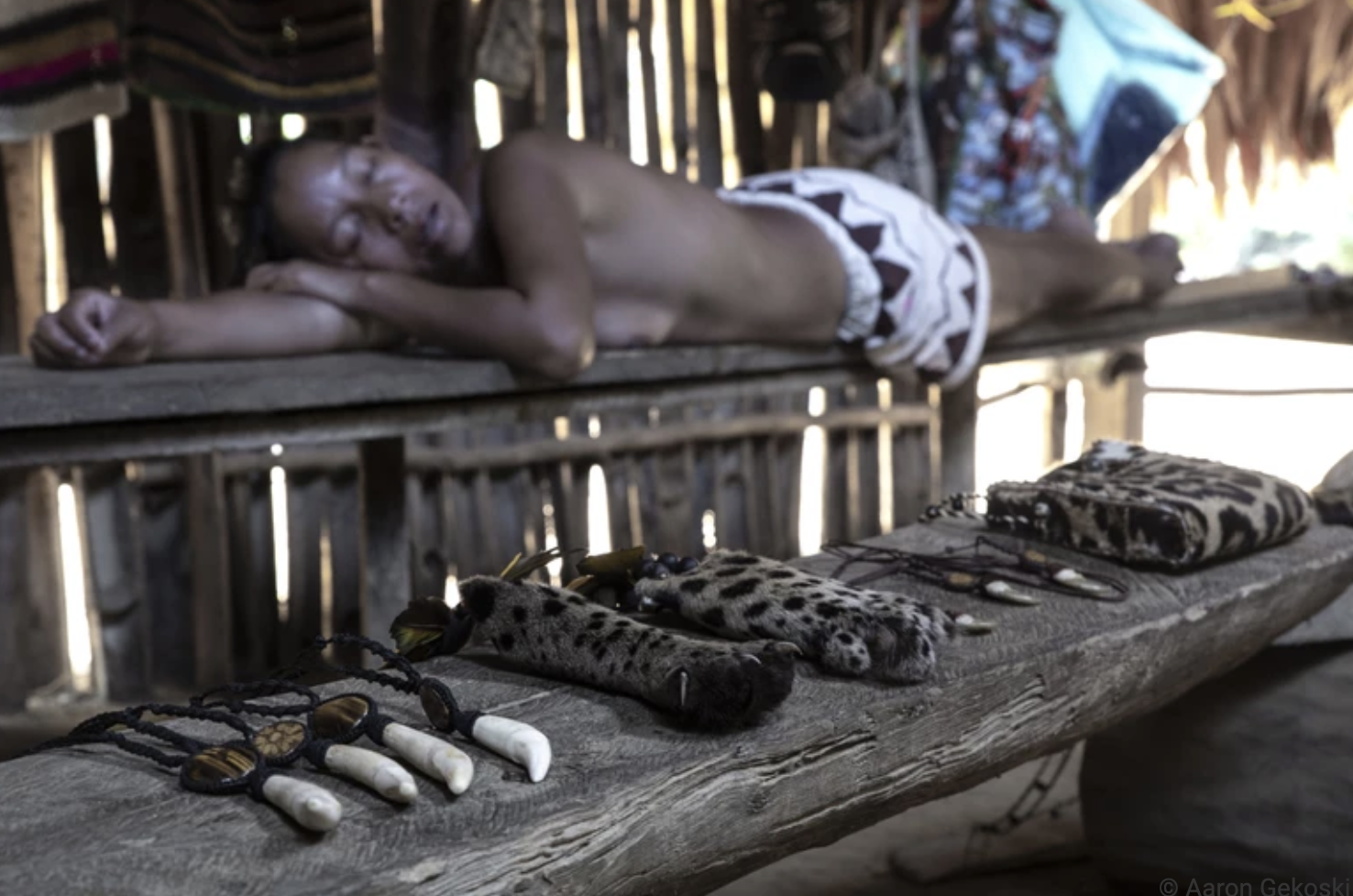
This is the most cinematic of the three. Produced by Terra Mater Studios and Four Corners Film & Photography in association with FOUR PAWS, it follows photojournalist Aaron Gekoski through Peru, South Africa, Pakistan and Southeast Asia. Its subject is big cats, but its deeper theme is commodification: jaguars killed for parts, lions and tigers bred commercially, big cats kept as status pets, and tourism experiences that turn predators into props.
2. Inside the Illegal Exotic Pet Trade | The Dark Web
This documentary is more directly focused on the live-animal market. It follows exotic pet trafficking in Southeast Asia and shows how social media can collapse the distance between seller and buyer. Its strongest message is that the trade can look mundane. A wildlife crime transaction may begin with a post or private message that looks little different from legal online commerce.
3. Business Insider’s 2026 How Crime Works investigation into illegal wildlife poaching
Wildlife criminologist and National Geographic Explorer Allison Skidmore describes undercover work investigating trafficking networks in Russia, Malaysia and the Horn of Africa. The episode makes the criminal architecture visible: poachers at one end, wealthy or specialised consumers at the other, and in between brokers, corrupt facilitators, logistics networks and financial systems. It is particularly useful because it moves the conversation beyond simply blaming people living near wildlife.
What actually works?
Enforcement remains essential. Rangers, customs officers, forensic laboratories, financial investigators and international intelligence sharing can disrupt networks and increase the risk of trafficking. Operation Thunder demonstrates what coordinated enforcement can achieve.
But enforcement alone is structurally incomplete. If a rare animal becomes harder to obtain while wealthy buyers still want it, scarcity can increase prestige and price. The durable solution is to reduce both opportunity and desire.
Demand reduction has matured considerably. CITES now urges countries with significant illegal wildlife markets to use species-specific, evidence-based campaigns, research consumer motivations, target particular consumer groups and combine behavioural change with law, policy and enforcement. That is very different from the older model of simply telling the public that wildlife trafficking is bad.
This matters because buyers are not one homogeneous group. Someone buying ivory as a prestige gift, someone seeking rhino horn because of a health belief, someone collecting rare reptiles and someone buying a parrot as a pet are responding to different motivations. Effective programmes therefore need segmentation: who is buying, what social reward are they seeking, what belief supports the behaviour, and what would make a substitute behaviour easier or more desirable?
The evidence also warns against overconfidence. A 2025 Conservation Biology review assessed 55 ivory demand-management interventions in China and Southeast Asia. Campaign quality improved after 2018, with greater use of consumer insights, but behavioural theory, monitoring and evaluation were still often weak. Among the 26 interventions assessed from 2018 to 2022, only nine incorporated monitoring and evaluation to some degree. Awareness, clicks and impressions are not the same as fewer animals being bought.
The best demand-side programmes therefore use behavioural science rather than publicity alone. They change social norms, reduce the status attached to wildlife products, make legal alternatives easier, increase perceived legal and reputational risk, work with trusted messengers, and measure actual behaviour wherever possible. TRAFFIC’s 2025 social and behaviour change guidance for Viet Nam reflects this shift towards interventions built around specific motivations and measurable behavioural objectives rather than generic awareness campaigns.
There is also a powerful role for friction. Platforms can make illegal trade harder by blocking search terms, detecting images, removing repeat sellers, sharing intelligence across companies and interrupting payment. Banks, payment processors and cryptocurrency firms can flag suspicious transactions. Airlines, ports and couriers can improve detection. None of these measures eliminates demand, but each raises the cost and risk of converting desire into a completed purchase.
An encouraging story: ivory demand can fall
There is good reason not to be fatalistic. China’s domestic ivory market closure, completed at the end of 2017, provides one of the strongest large-scale examples of demand-side policy affecting wildlife crime.
A study published online in 2025 in Biological Conservation evaluated elephant poaching and seizure data around the ban. The authors found that implementation of the total ivory ban corresponded with an approximately 50% decrease in poaching and a significant fall in seizure cases. A separate 2025 analysis of elephant poaching trends likewise found a substantial decline after the mid-2010s and concluded that international restrictions work best when paired with domestic market suppression.
These studies do not prove that every part of the decline was caused by one policy. Wildlife crime is influenced by enforcement, prices, governance, economic conditions and local conservation. But the direction of evidence is important: reducing legal market space, laundering opportunities and social acceptability can translate into fewer animals being killed.
A smaller but more recent example comes from TRAFFIC’s work on African grey parrots in China. A targeted campaign reached more than 1.6 million people identified as potential buyers and generated more than 20 million impressions. Post-campaign evaluation found that more than half of potential buyers shifted towards rejecting illegally traded parrots, alongside improved understanding of legal requirements. Those are encouraging behavioural signals, although they are not yet the same as demonstrating a population-level reduction in trafficking.
The lesson is that demand is not fixed. Social norms change. Markets change. Products that once signalled status can become embarrassing or unacceptable. Consumers can learn that a “captive-bred” animal may have been laundered from the wild, or that a social-media photo with a cub helps sustain a breeding and trafficking industry.
The best strategy for 2026 is therefore not one intervention but a system: protect wildlife at source, investigate organised crime, follow the money, close legal loopholes, force digital platforms to remove trafficking infrastructure, support communities living alongside wildlife, and invest much more seriously in changing consumer behaviour.
The trade exists because people create markets for wildlife. That is confronting, but it is also hopeful. Human behaviour created the demand, and human behaviour can reduce it.
Selected references
United Nations Office on Drugs and Crime. World Wildlife Crime Report 2024. UNODC, 2024.
INTERPOL. 30,000 live animals seized in global operation against wildlife and forestry crime. 11 December 2025.
Di Minin E, D’Cruze N, Elwin A, et al. Global trends and impacts of the online illegal wildlife trade. Nature Reviews Biodiversity. 2026. doi:10.1038/s44358-026-00192-8.
Brown MRC, Wells VK, Beale CM. Assessing the integration of social marketing principles in ivory demand management interventions in China and Southeast Asia. Conservation Biology. 2025/2026;40:e70191. doi:10.1111/cobi.70191.
No trade, no killing: An evaluation of China’s ivory ban on elephant poaching. Biological Conservation. 2026;313:111514. doi:10.1016/j.biocon.2025.111514.
Ivory trade bans and elephant poaching: A temporal analysis using PIKE data and policy interventions. Global Ecology and Conservation. 2025;61:e03658. doi:10.1016/j.gecco.2025.e03658.
Xu J, Gibson L, Jiang A. Characterizing China’s Illegal Trade in Avifauna on Social Media. Integrative Conservation. 2025. doi:10.1002/inc3.70053.
CITES. Resolution Conf. 17.4: Demand reduction strategies to combat illegal trade in CITES-listed species.
TRAFFIC. Social and Behaviour Change Guidebook for Wildlife Protection in Viet Nam. 2025.
TRAFFIC. Keeping African Grey Parrots in the Wild. Campaign evaluation updated to March 2026.